Local SEO for Belgian businesses
Want to attract more customers from your region? Discover how local SEO works, from Google Business Profile to reviews and local backlinks. Specifically tailored to the Belgian market.


If you run a local business in Belgium, whether it's a plumber in Antwerp, a restaurant in Ghent, or a dental practice in Brussels, then local SEO might be the most important investment you can make in your online visibility.
But what exactly is local SEO? And how do you ensure your business appears at the top when someone in your area searches for your services?
In this complete guide, we explain step by step how local SEO works and what you can concretely do to attract more customers from your area.
What is Local SEO?
Local SEO is the process of optimizing your online presence so you become more findable for searches with local intent. Think of searches like:
- "plumber near me"
- "best restaurant Ghent"
- "dentist Antwerp centre"
- "Google Ads agency Mechelen"
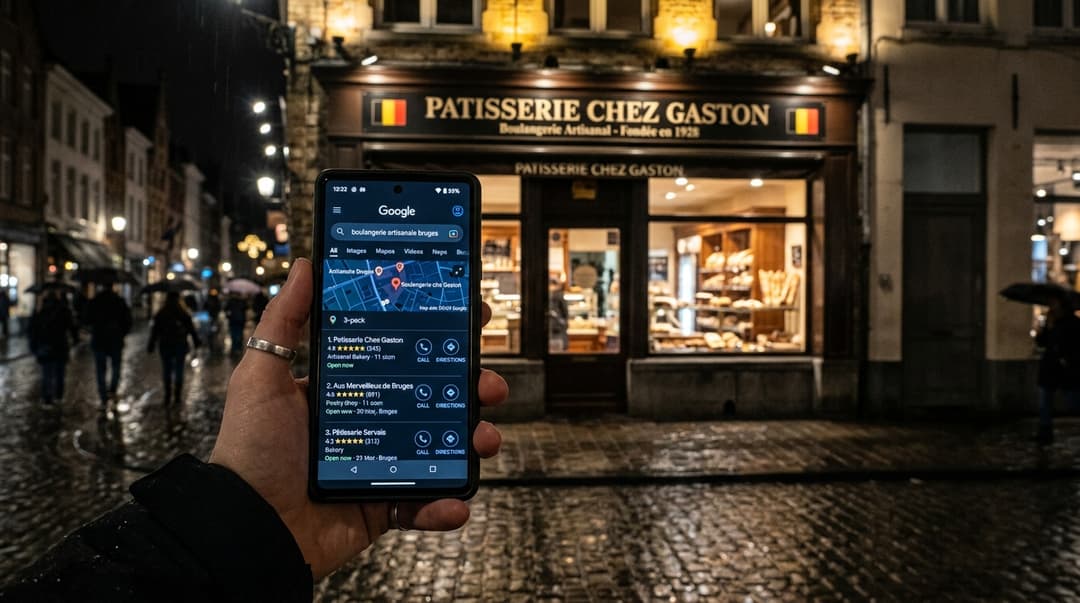
Google recognizes this local intent and shows results that are relevant to the searcher's location. The well-known Local Pack, the map with three businesses at the top of search results, is where you want to appear.
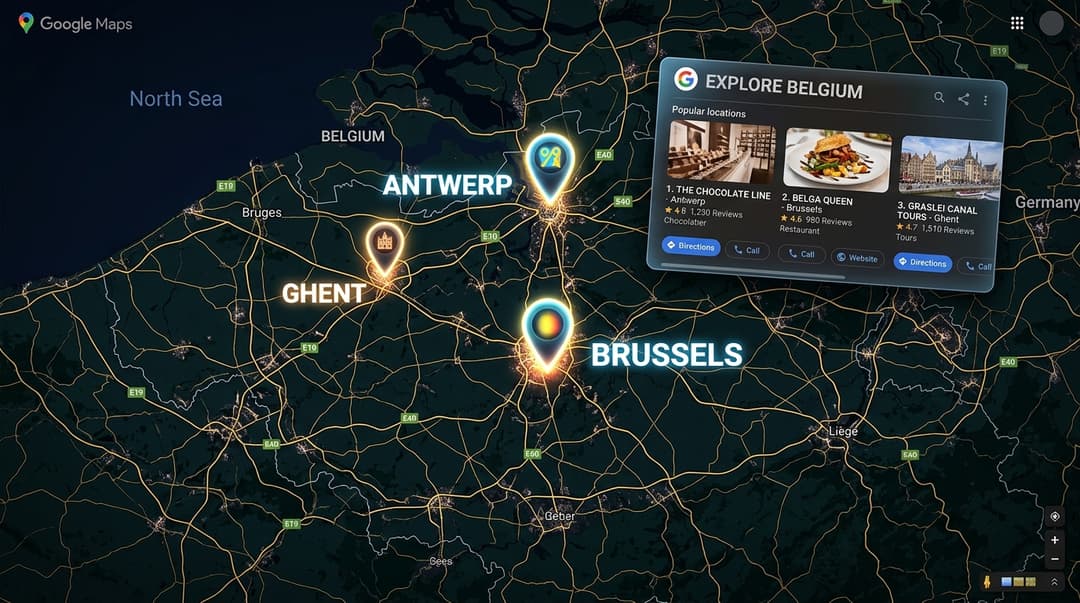
Why Local SEO is Important for Belgian Businesses
Belgium has a unique market structure that makes local SEO extra important:
- You're dealing with bilingualism: Dutch and French-language searches, sometimes even within the same city (think of Brussels)
- Many Belgian consumers have a regional focus, specifically searching for businesses in their municipality or province
- Belgium has high smartphone penetration, and mobile searches often have local intent
- Competition is growing: more and more local businesses are discovering the power of local SEO. Those who don't invest are losing ground
Some Numbers That Speak for Themselves
- 46% of all Google searches have local intent
- 76% of people who search locally on their smartphone visit a business within 24 hours
- 28% of those local searches lead to a purchase
Step 1: Optimize Your Google Business Profile
Your Google Business Profile (GBP, formerly Google My Business) is the foundation of your local SEO strategy. This is the profile that appears in the Local Pack and on Google Maps.
Claim and Verify Your Profile
If you haven't done this yet, go to business.google.com and claim your business. Google will send a verification code by mail or phone.
Optimize Your Business Information
Make sure the following details are 100% correct and complete:
- Use your official business name without keyword stuffing
- Enter your address exactly as it appears on your website and other platforms
- Add a phone number, preferably a local one
- Keep your opening hours always up to date, including holidays
- Link your website URL to your homepage or a relevant landing page
- Choose the most specific primary category and add relevant secondary categories
- Write an attractive description of 750 characters with relevant keywords
Add Photos and Videos
Businesses with photos receive 42% more direction requests and 35% more clicks to their website. Regularly upload:
- Photos of your premises (exterior and interior)
- Team photos
- Photos of your products or services
- Short videos of your work process
Use Google Posts
Publish a Google Post weekly with updates, offers, or news. This keeps your profile active and signals to Google that your business is engaged.
Step 2: Ensure NAP Consistency
NAP stands for Name, Address, Phone number. This must be exactly the same everywhere on the internet. Any inconsistency, even a difference between "street" and "st.", can confuse Google.
Where Should Your NAP Match?
- Your website (footer, contact page, about us)
- Google Business Profile
- Facebook, Instagram, LinkedIn
- Gouden Gids / Pages d'Or
- Industry-specific directories
- Local business directories
Tip for Belgian Businesses
Use your address consistently in either Dutch or French, depending on your target audience. If you serve both languages, consider separate GBP profiles per language (where applicable).
Step 3: Research and Use Local Keywords
Local keywords are search terms that contain a geographic component. It's important to strategically incorporate these into your content.
How Do You Find the Right Local Keywords?
- Use Google Suggest: start typing and see what suggestions Google provides
- Try the Google Keyword Planner and filter by location (Belgium, specific province or city)
- Check the People Also Ask section in Google for inspiration on long-tail keywords
- Do a competitor analysis to see which terms your local competitors rank for
Where Do You Incorporate Local Keywords?
- In your title tags, for example: "Plumber Antwerp | Available 24/7 | Business Name"
- In your meta descriptions, mentioning your city or region
- In H1 and H2 headings, incorporated naturally
- In your body text, writing about local topics and events
- In your URL structure, like /services/plumber-antwerp
- In image alt text, describing images with local context
Step 4: Build Local Backlinks
Backlinks from local websites are very useful for your local SEO. They tell Google that you're a relevant and trustworthy business in your region.
How Do You Get Local Backlinks?
- Reach out to local news sites and blogs by offering an expert quote or writing a guest blog
- Consider sponsorship of a local event, sports club, or charity
- Build partnerships with other local businesses and link to each other
- Register with your Chamber of Commerce through Voka, Unizo, or other Belgian business organizations
- Make sure you're listed in relevant Belgian local directories
Step 5: Set Up a Reviews Strategy
Reviews are one of the most important ranking factors for local SEO. They influence your position and whether someone clicks on your business.
How Do You Get More Reviews?
- Ask actively after every successful project or purchase
- Make it easy by sending a direct link to your Google review page
- Respond to all reviews, both positive and negative
- Ask for a review when the customer is most satisfied, because timing matters
Dealing with Negative Reviews
- Always respond professionally and empathetically
- Offer a solution
- Take the conversation offline if it's complex
- See it as feedback to improve your service
Step 6: Mobile-First Optimization
Google uses mobile-first indexing, which means the mobile version of your website determines your ranking.
Checklist for Mobile Optimization
- Aim for a loading speed under 3 seconds
- Use responsive design with no horizontal scrolling or text that's too small
- Enable click-to-call so your phone number is clickable on mobile
- Keep navigation simple with large buttons and clear menus
- Make local information prominent: address, opening hours, and directions should be easy to find
Step 7: Structured Data for Local Businesses
Structured data (Schema.org markup) helps Google better understand your business information and can lead to rich results in search results.
Important Schema Types for Local Businesses
- LocalBusiness for basic information about your business
- OpeningHoursSpecification for your opening hours
- Review for customer reviews on your website
- GeoCoordinates for the exact location of your business
- Service for the services you offer
Implementation
You can add structured data via:
- JSON-LD (recommended by Google)
- Google's Structured Data Markup Helper
- WordPress plugins like Yoast SEO or Rank Math
Bonus Tip: Leverage Belgian Multilingualism
If you serve customers in multiple language regions, consider:
- Creating separate landing pages per language, such as /nl/services and /fr/services
- Implementing hreflang tags to tell Google which page is intended for which language
- Writing language-specific content that matches the search habits per language, rather than just translating
- Setting up multiple GBP profiles if you have locations in different language regions
Get Started with Local SEO
Local SEO is not a one-time action but an ongoing process. Start with the basics — Google Business Profile and NAP consistency — and build from there.
The beauty of local SEO is that it can deliver results relatively quickly, especially if you're active in a less competitive niche or region.
Want to know how your business currently stands in terms of local findability? At Saerens Advertising, we offer a free SEO audit where we analyze your local SEO score and identify concrete areas for improvement. Contact us without obligation and discover how many potential customers you're currently missing out on.
Need help with your marketing?
Request a free audit today and discover where you're missing opportunities.